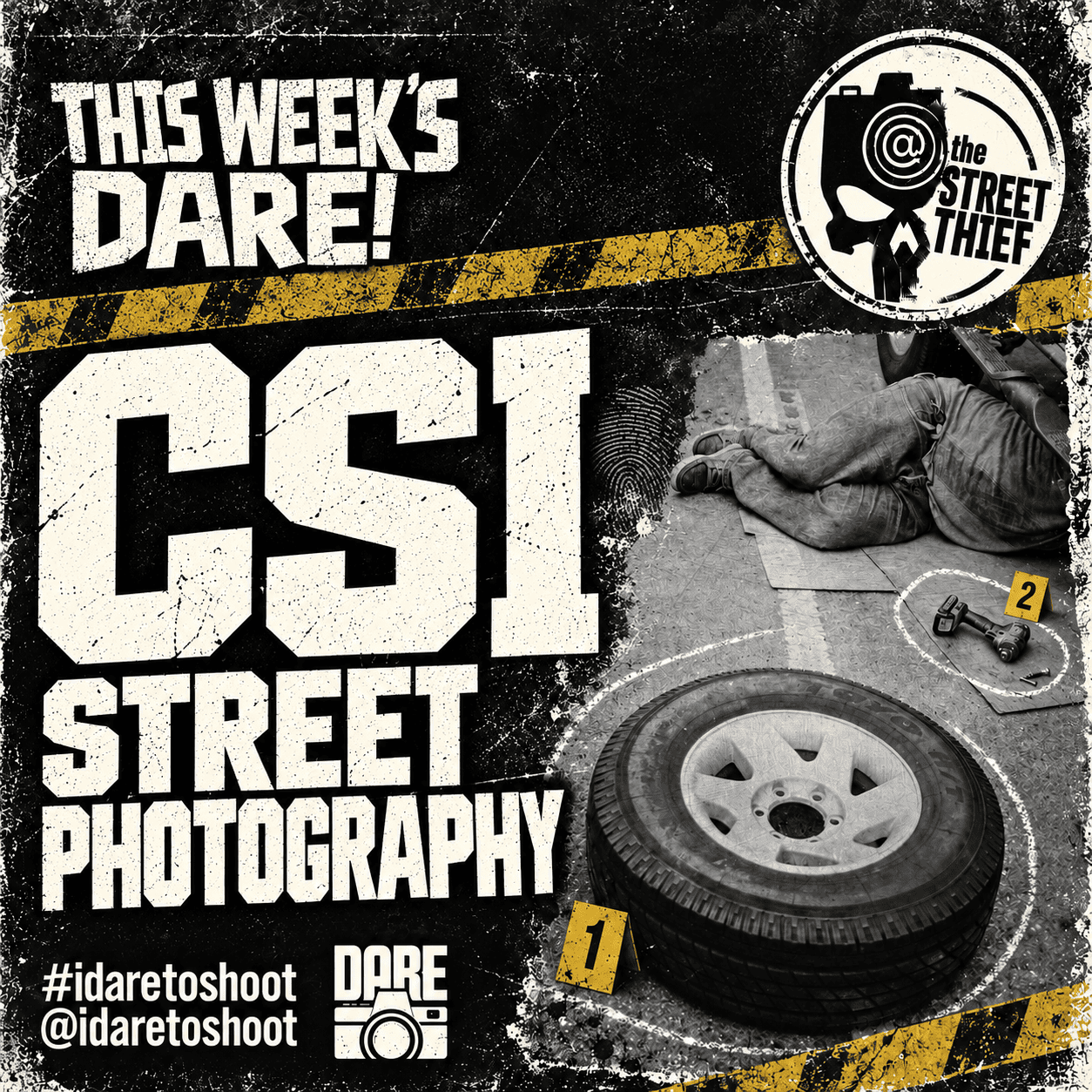
CSI Street Photography
THE INSIGHT
A crime-scene investigator doesn’t arrive knowing the whole story. They build it from fragments: the position of a chair, a half-finished drink, cigarette ends under a window or the strange distance between two people. Photography can work in the same way. Instead of making one obvious picture and walking away, we can gather smaller pieces of visual evidence that gradually reveal how a place is being used and what may have happened there. It could be the remains of a street party, two people smoking outside a pub or somebody packing away a market stall. Each photograph peels back another layer, making us slow down, investigate and see more deeply into an apparently ordinary scene.
THE QUESTION
We often decide what a scene is about too quickly, photograph its surface and move on. But what if the first picture is only the beginning of the investigation? If somebody discovered your photographs without captions or explanation, what would they believe happened here?
THE CHALLENGE
Choose one small scene where something is happening or has recently happened, then approach it like a street-scene investigator gathering evidence. Make three photographs showing the location, the people involved and the objects, gestures or traces that reveal another layer of what occurred. Don’t stage anything, manufacture mystery or invent facts; work only with what is genuinely there. Present the pictures together as a case file and allow the viewer to reconstruct the scene for themselves.
the CONTACT SHEET
YOUR INSIGHTS
In last weeks newsletter I invited you to find a scene that interests you and make your first photograph as you normally would. Then stay with it and keep removing: move closer, change your angle, simplify the background, wait for distractions to leave and make a new frame each time.
Johannes Mueller | @JBMGreece
This one went the other way around for me. Katharina runs a dry cleaning. I told her that I had to take pictures of her. She was shy so I proposed to make just a shot of her neck. She liked it and loosened up a little bit, so I took some portraits and then a shot outside with her environment where she obviously felt uncomfortable because she thought what people might think. Only at home I discovered what the tattoo said and that the atmosphere of that shot included everything what was important for me. It says: “Dare beyond”. Unbelievable?! A message from elsewhere…
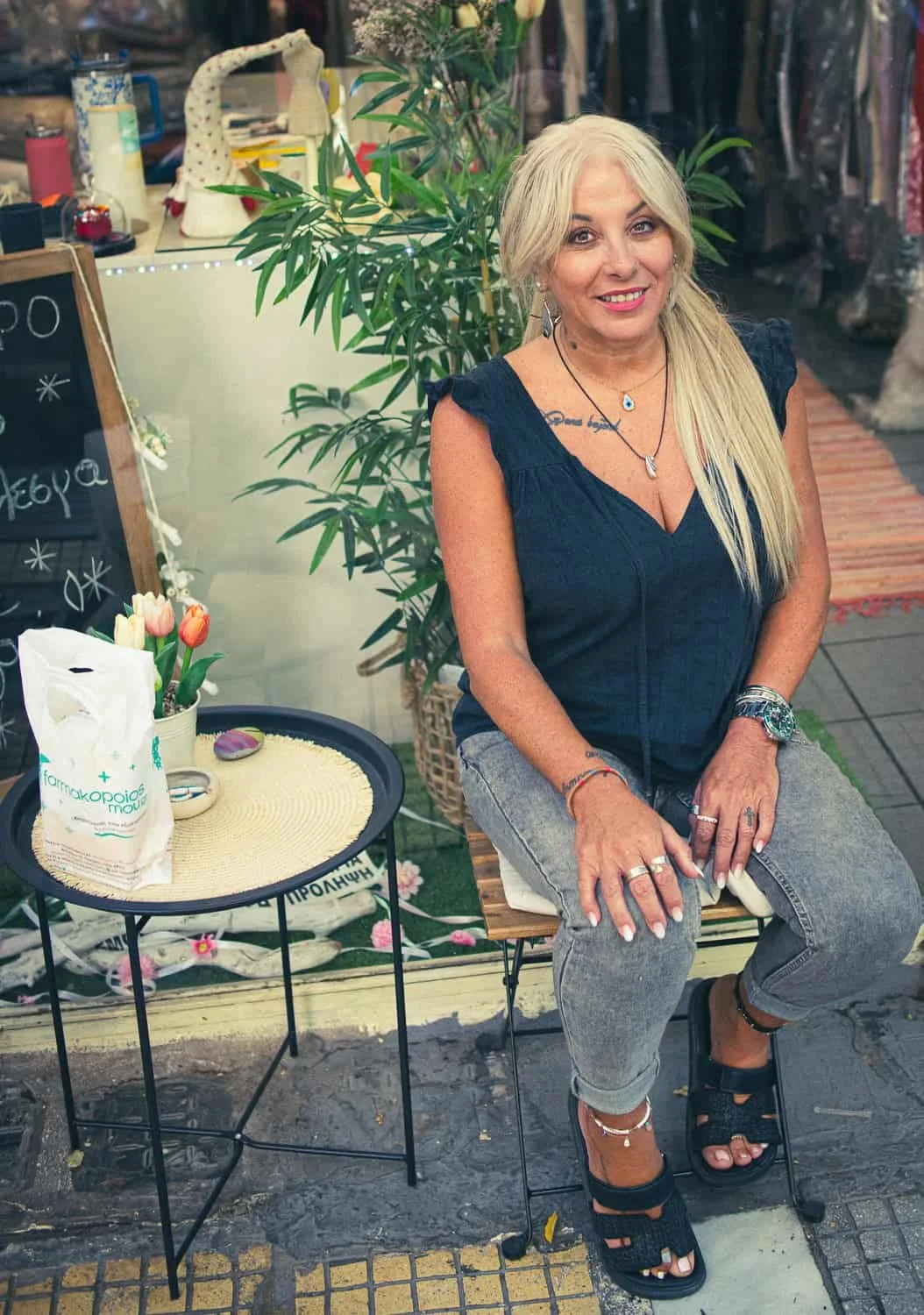
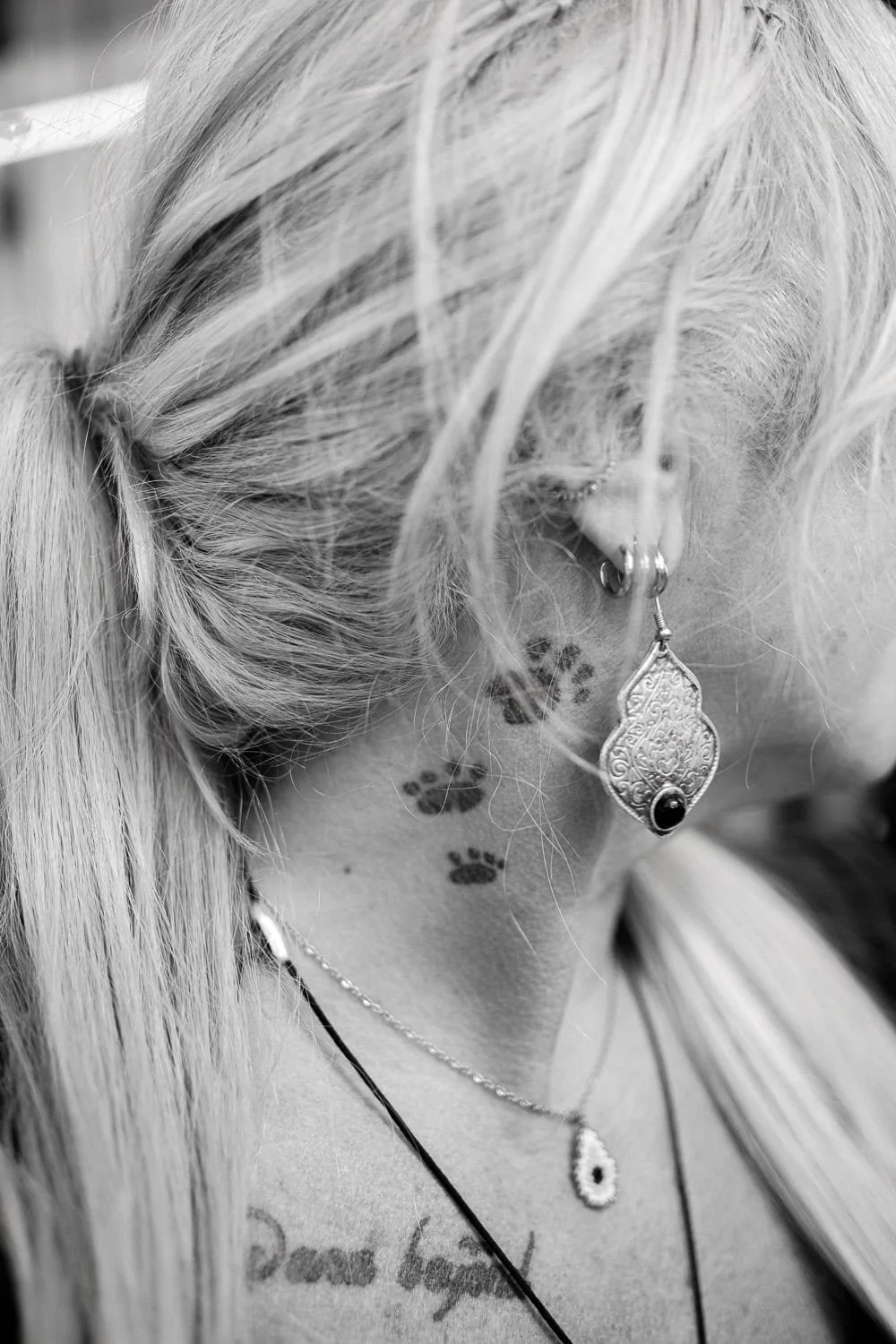
How could I have not see it during the shooting?
I discovered that for me important elements may be different than for someone else. The only objective measure might be the honest feeling about the photograph. And I certainly learned that it is good to take more than enough photographs to discover the possibilities which are in front of us.
Tim Clark | @timclarkih
What did you attempt?
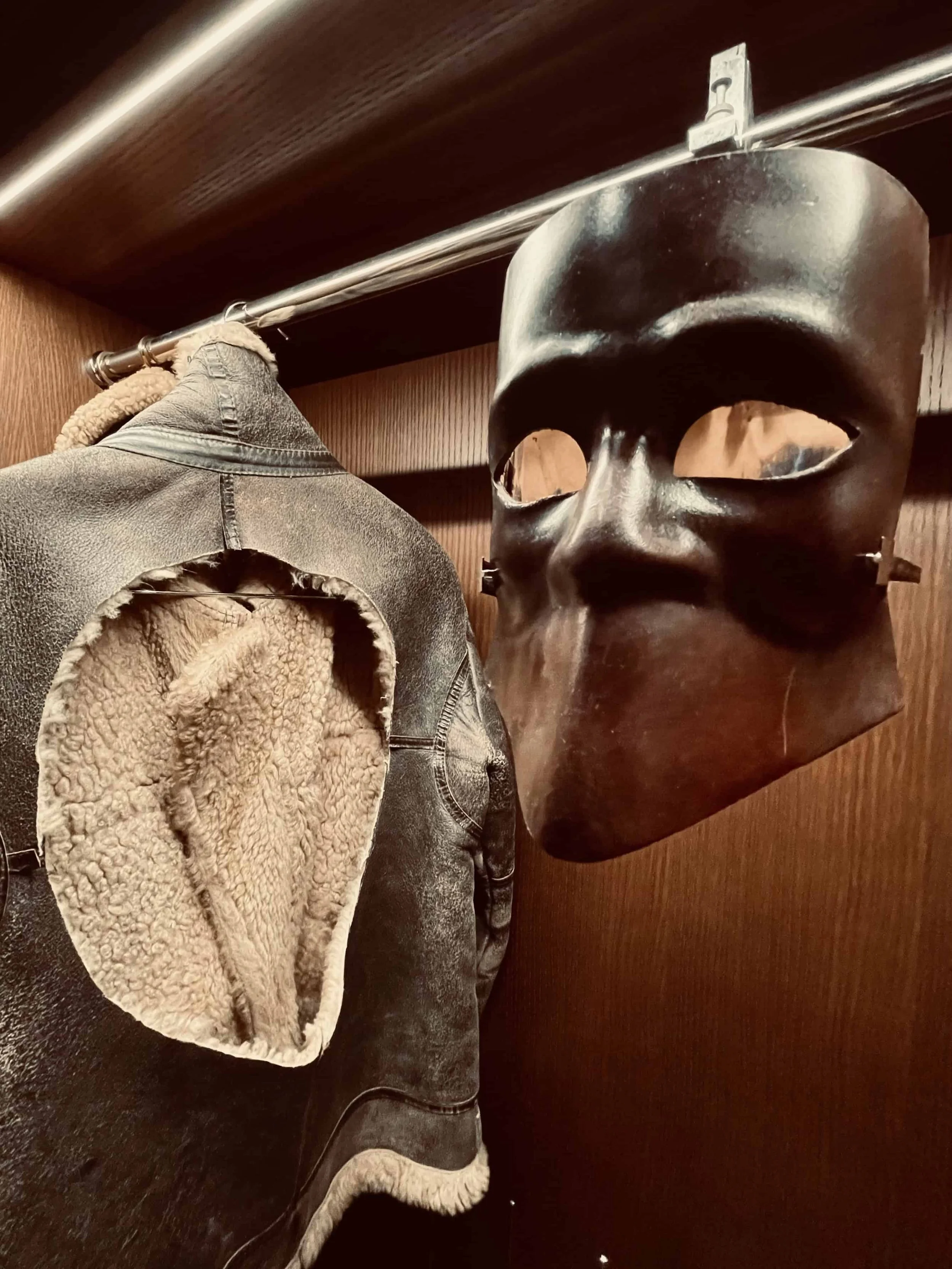
To make sense of an art show in hotel rooms.
What challenged you?
Thinking a new hotel hosting an Frieze Art show would be photogenic.
What did you discover?
It was rubbish. Too busy. Nothing to lock onto.
Until I found this this the cupboard. So in my head I had gone from Hotel-Art floor-room-cupboard.
Stuart Mills| @millsyshoots
I was out this week looking for shots for my current project when I noticed this bike chained up to some railings. I was looking for a frame that would work within the project but couldn’t quite get it to fit in with my vision. It was intriguing me though so I kept trying different framing and angles. The more I stayed I started noticing more and noticed the discarded package wedged in the wheel and it said Velo on it. I came in closer to remove some of the clutter from the surroundings and this was the frame I ended up with.
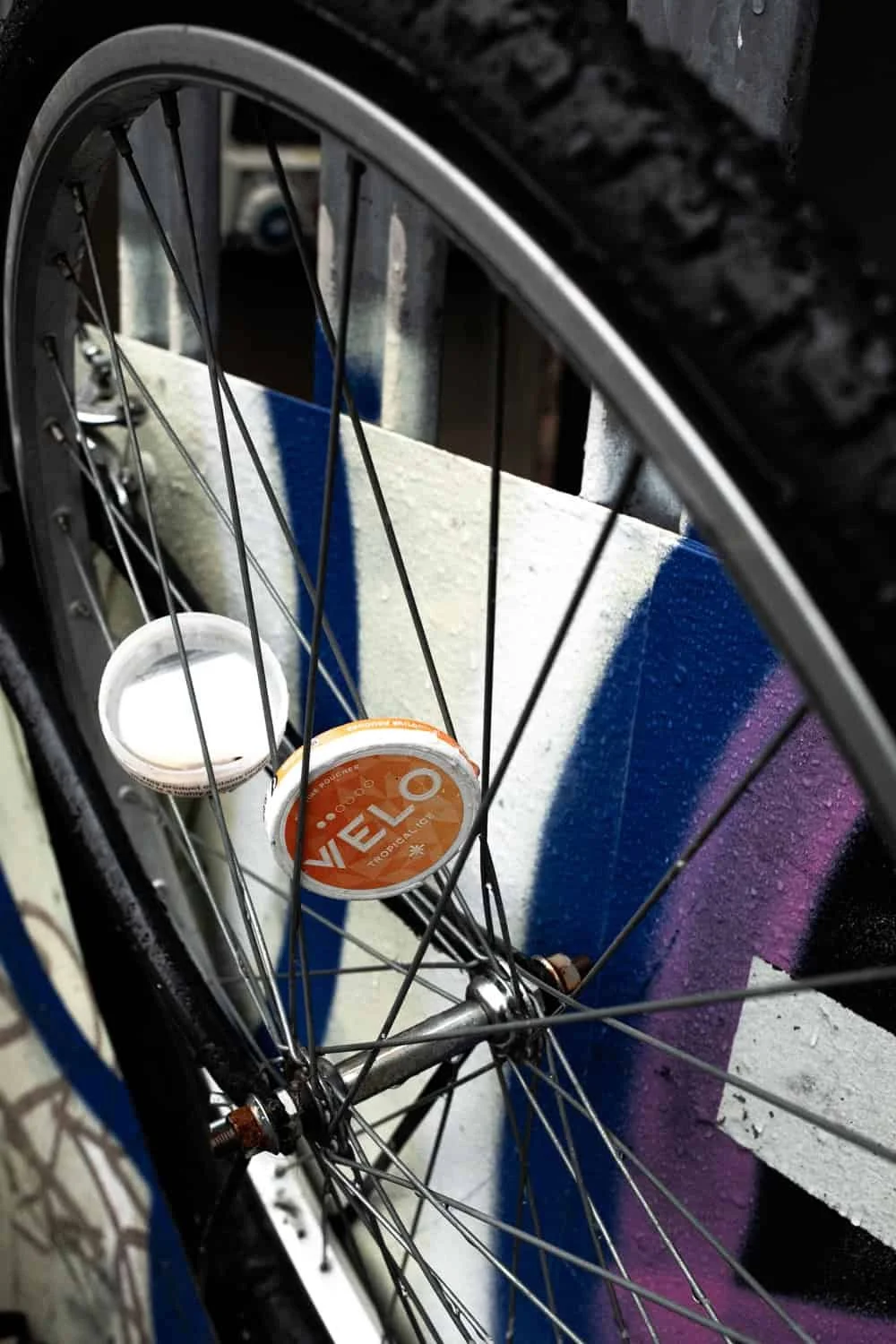
I was being challenged because I was looking for a different feel to the shot and it just wasn’t connecting in terms of the shots I want for my project. I could have easily walked away feeling a bit disappointed that I hadn’t got the shot I was going for but I hung in there and kept on looking at the framing and angles.
I am always looking for little juxtapositions in the environment and they can be a little bit cliche sometimes, but I don’t mind that and feel it is ok to have a bit of fun now and again.
What I discovered or confirmed what I know to be true is that if you give up on the first attempt if it’s not working out then you can miss out on something else. If you wait long enough then the shot will present itself, its already there, you just have to see it.
Mirek | mr_miro_foto
What did you attempt?
I went into town to take some photos, but when I got back, there were too many distractions in each of the images I had taken. I wasn't happy with the photos, so I sat down in my living room. That was when I noticed my wife sitting in an armchair. When I looked at her and at the scene around her, I realised there were far fewer distractions than in the photos I had taken in town. I had my camera next to me, so I simply took a photograph of my wife.
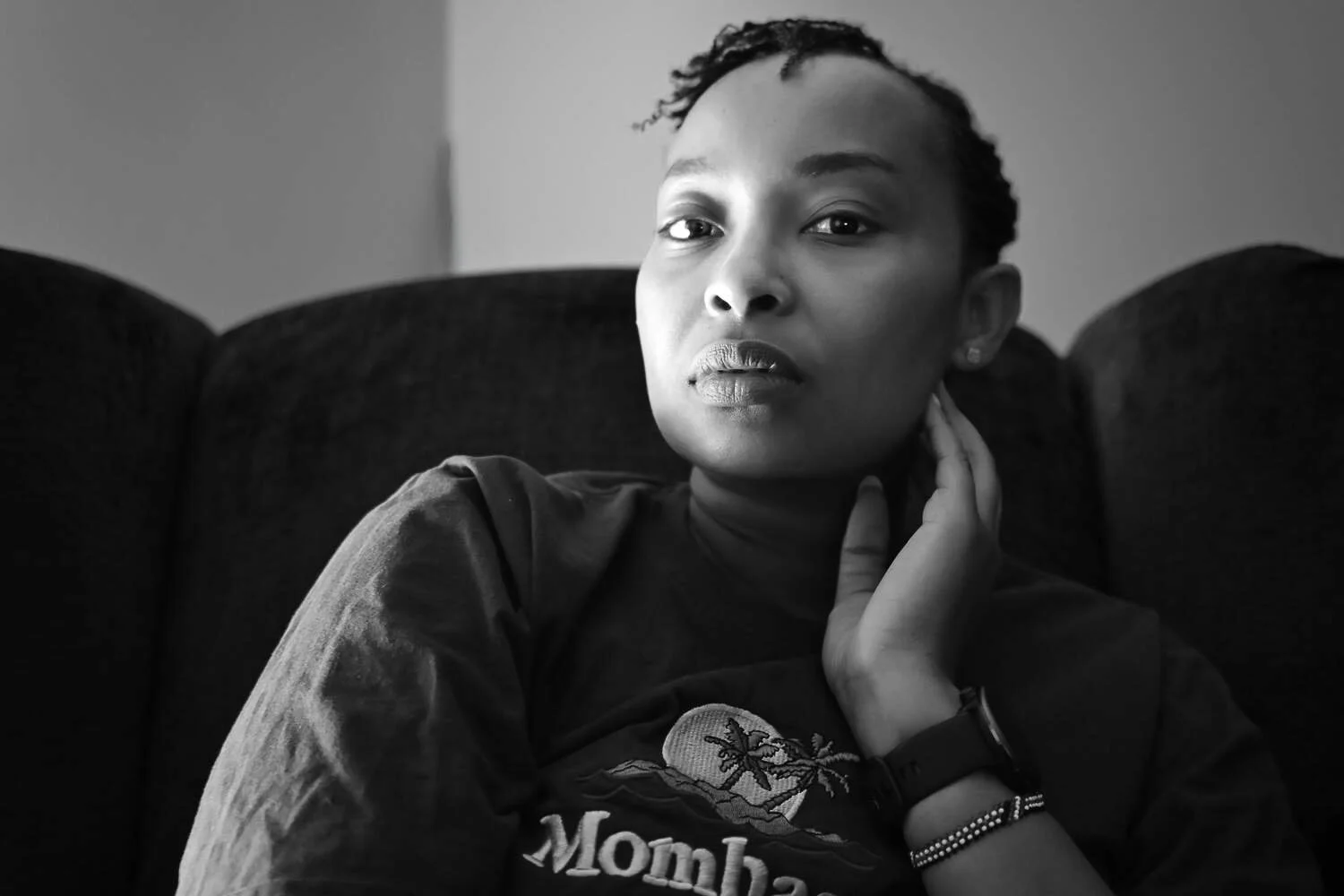
What challenged you?
It is not easy to minimise distractions in busy places such as a town centre. It is certainly possible when an appropriate background is chosen and time is taken to observe the surroundings carefully. This was challenging for me because I am still building my confidence as a photographer, and I often rush. As a result, I tend to include too many distractions in my photographs.
What did you discover?
I discovered that taking the time to observe the environment and being fully present in the moment helps to minimise distractions and create stronger photographs.
ISO Steve | isosteve100
I started by taking a photograph of the whole drum kit, capturing the scene as I naturally saw it.
But that was not the challenge.
I started to focus on single elements of the kit.
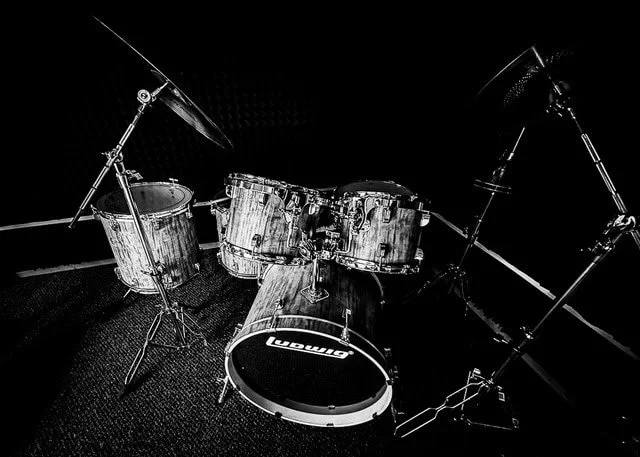
The Sabian Cymbal.
I was especially drawn to the Vic Firth drum sticks on the floor tom.
I looked up Everett Joseph “Vic” Firth.
He designed and hand -whittled his prototype drum sticks SD1 and SD2 which became very popular.
In 1963 he formed Vic Firth Company, not only did it make drum sticks, it also produced salt and pepper mills and rolling pins.
By stripping away the wider scene and focusing on a single element, I felt the photograph was more intimate and gritty.
I believe the drum kit was still recognisable, but now the photographs were about its different characters, rather than its entirety.
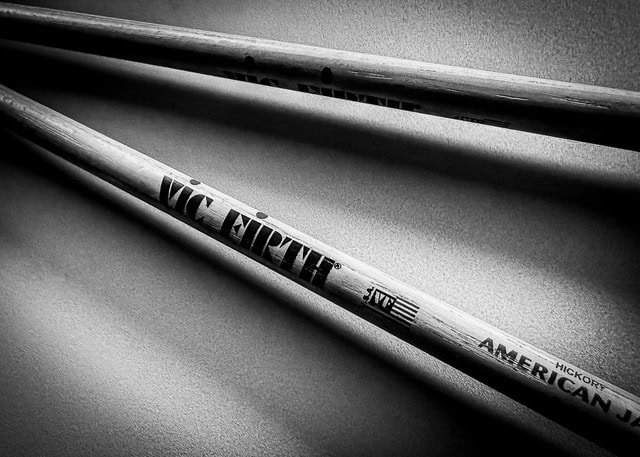
From this challenge my new learning is the strongest image isn’t about what you include, but what you choose to leave out.
Don’t forget … each week, reply to the newsletter with your images and your insights. Get involved and I will share a handful each week right here on the newsletter. Also … tag your images on Social media @idaretoshoot and #idaretoshoot to be featured on DARE.
Dispatch Archives